
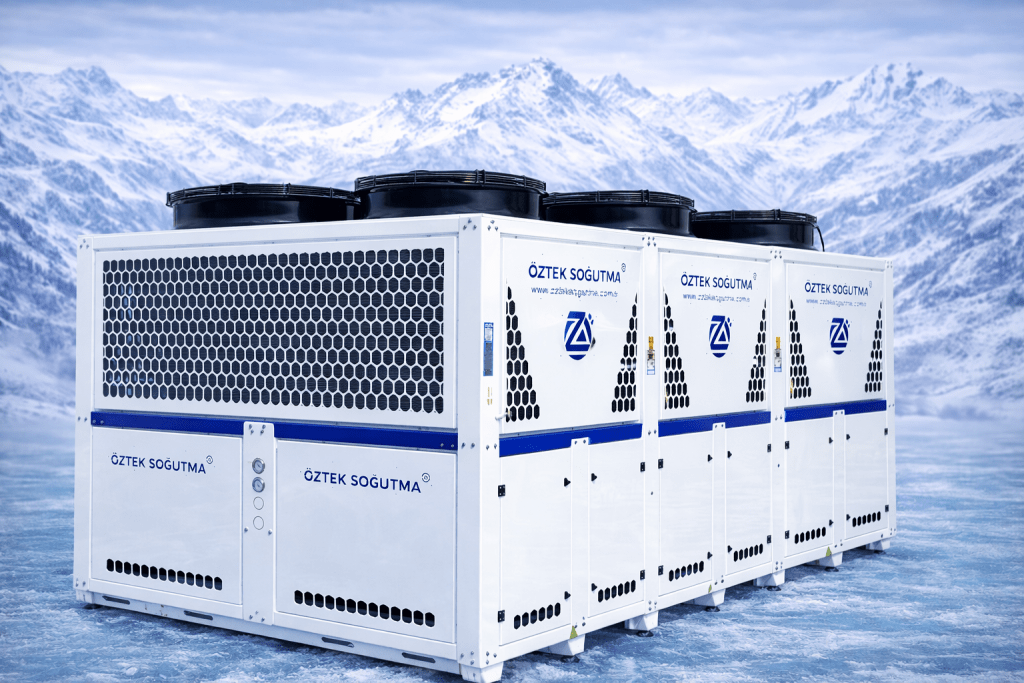
A water-cooled condensing unit transfers condenser heat to water instead of air. With no condenser fan it is quiet and can be installed indoors; the rejected heat is carried through a water circuit to a dry cooler or cooling tower. This article explains when water-cooled units are the right choice.
When are they preferred?
- When there is no suitable place for an outdoor unit
- In residential areas and buildings where noise is a problem
- When the heat of many refrigeration units should be rejected at one point
- When the rejected heat is to be recovered
Condenser water
Condenser water can be cooled in a closed circuit by a dry cooler, with no water consumption. With a cooling tower, lower water temperatures are achieved in summer but water treatment is needed. Running mains water continuously is a large waste of water and is not recommended.
Heat recovery
Condenser water heat can be used to preheat domestic hot water or for process heating, lowering total energy cost.
Maintenance
Check scaling and fouling on the condenser water side, monitor water flow and make sure flow and pressure safety devices that protect the unit when water stops are working.
Common water circuit for several units
If a building has many cold rooms, each room’s water-cooled unit can be connected to a common condenser water line, and the heat is rejected through a single dry cooler or tower. This removes the look and noise of many units on the facade.
Frequently asked questions
Is a water-cooled unit more efficient?
Usually yes if condenser water can be kept at a low temperature, but pump and dry cooler/tower consumption must also be counted.
What happens if water stops?
The high pressure safety switch stops the unit, so the reliability of the water circuit is important.
Tell us about your project. Send your product, quantities and location via WhatsApp or e-mail; our engineers will calculate the load and recommend the right system in writing.